
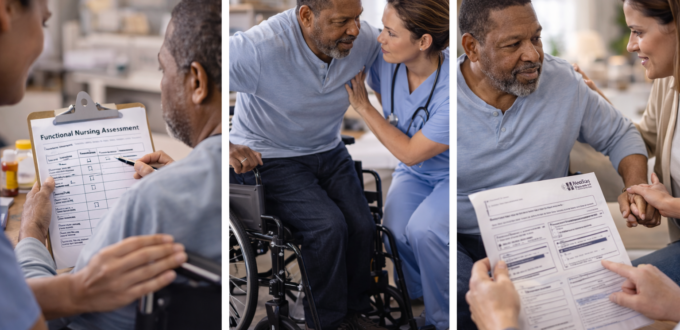
Home health functional assessment requirements are the practical rules a person must meet before Medicaid-funded Home Care can be authorized in New York. The system is built around function, meaning what the patient can and cannot safely do in daily life, not just diagnoses, age, or a doctor saying someone needs help.
In New York, the functional assessment for many Medicaid community-based long-term care services is conducted using the Uniform Assessment System for New York (UAS). The UAS includes the Community Health Assessment, which is used to evaluate needs for State Plan community-based long-term services and supports, and is part of the New York Independent Assessor process.
The core requirement is showing measurable limitations in activities of daily living and safety. During the assessment, the nurse reviews areas like bathing, dressing, toileting, transferring, walking or wheelchair mobility, eating, and the ability to stay safe at home. The assessment also looks at cognitive status, memory, judgment, and whether the person can manage routines without becoming a risk to themselves.
Another requirement is that the need must be medically necessary and supported by documentation. The assessment is not a casual interview. It is used by Medicaid or a Medicaid managed plan to decide whether services are authorized, what type of Home Care is appropriate, and how many hours are approved. That is why inconsistent records, missing notes, or a patient minimizing limitations during the visit often lead to reduced hours or denial.
Coverage eligibility is also required. The patient must be eligible for Medicaid coverage that includes Home Care benefits, and the plan pathway matters. Many people receive long-term services through Managed Long Term Care, which is designed to coordinate and pay for long-term services for people who are chronically ill or disabled and want to stay at home. The functional assessment feeds into that authorization structure.
It is also important to match the service level to the findings. Most patients require PCA Home Care, and top licensed agencies provide training for that level of care. Some patients need HHA-level Home Care, which top, vetted, and reliable agencies can provide when the clinical situation requires higher oversight. The assessment must support the level requested; plans commonly approve a lower level or deny the request as not meeting the threshold.
For OPWDD pathways, the functional concept is similar, but eligibility is different. OPWDD services are for people with qualifying developmental disabilities and long-term support needs, and functional impact is part of showing the person needs ongoing assistance and structured services, not just a label or diagnosis.
When families are switching agencies or trying to start services after approval, the same functional requirements still matter because authorizations are periodically reviewed. A plan can be reassessed, adjusted hours, or require an updated evaluation when circumstances change. This is why we focus on setting up cases correctly and referring only to top, vetted, and most reliable licensed Home Care agencies that follow the rules and manage the process professionally.
If you want to expedite the process and have an intake call, please complete the eligibility form at https://familycaregiverny.com/eligibility-form or contact us for more information.