
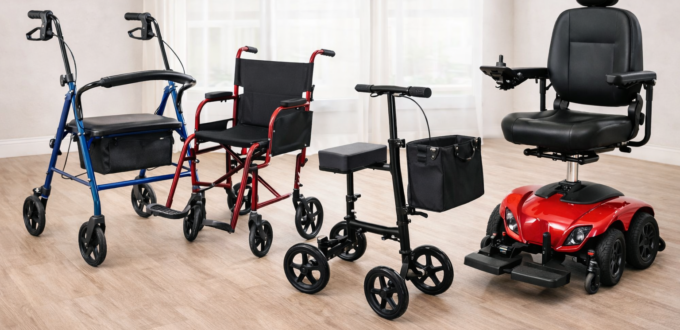
Devices that help people with disabilities are often described as tools that improve mobility, safety, or independence. But the real value of these devices is not in what they are called, it is in when they are used and what problem they solve during everyday life.
For many people with disabilities, the biggest challenges do not happen all at once. They happen in transitions. Standing up from a chair, getting out of bed, moving through tight spaces, bathing safely, or maintaining balance while walking are moments where support matters most. Devices that address these moments are often the most impactful.
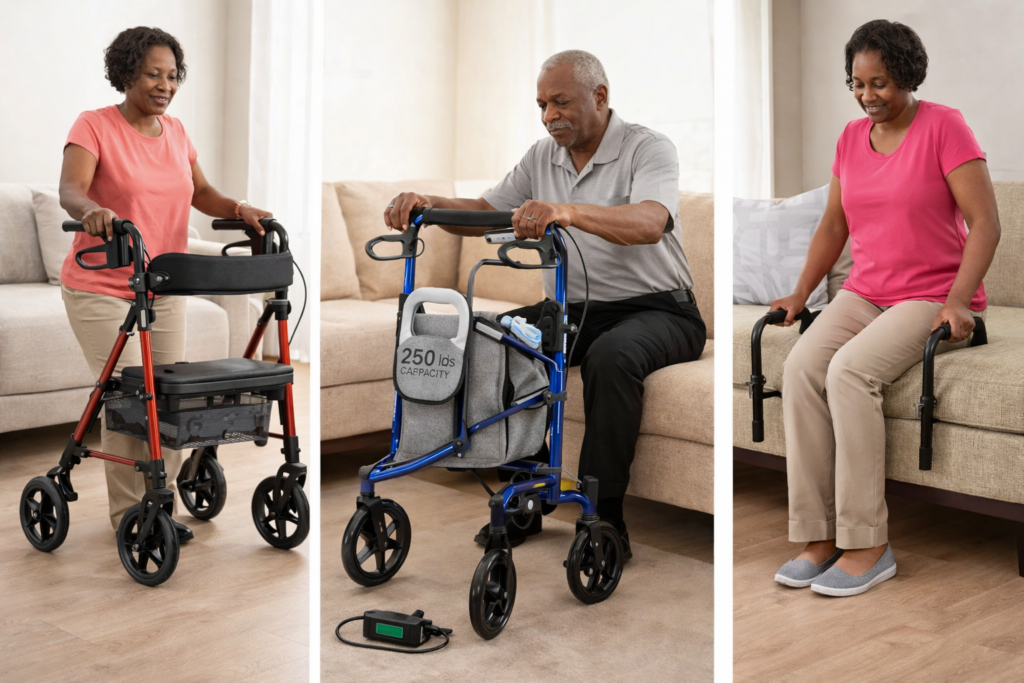
Mobility support devices are among the most widely used. Walkers, rollators, wheelchairs, and mobility scooters help individuals move safely when strength, balance, or endurance is limited. These devices reduce fall risk and allow people to continue participating in daily activities rather than avoiding movement out of fear.
Transfer and stability devices are equally important but often overlooked. Stand-assist rails, bed rails, grab bars, and raised seating supports help people shift their weight safely. These tools reduce strain on joints and muscles and are especially helpful for individuals with neurological conditions, arthritis, or muscle weakness.
Bathroom safety devices play a major role in independence. Shower chairs, transfer benches, handheld shower supports, and non-slip aids help reduce accidents in one of the most dangerous areas of the home. Many injuries related to disability occur during bathing, making these devices essential rather than optional.
Assistive devices also extend beyond physical movement. Adaptive tools for daily living, such as reacher tools, specialized utensils, dressing aids, and medication organizers, help people manage routine tasks without constant assistance. These devices support dignity and reduce reliance on caregivers for simple activities.
What makes a device helpful is not its complexity but its fit. The best device is one that matches the individual’s abilities, living environment, and daily routine. A device that is too advanced or uncomfortable often goes unused, while a simple, well-chosen tool can dramatically improve quality of life.
Devices alone do not replace care, but they often work best alongside it. When disabilities affect daily living, combining assistive devices with in-home support can reduce injuries, caregiver strain, and emergency situations. This approach allows people to remain at home longer and maintain more control over their lives.
Understanding which devices help people with disabilities starts with identifying the specific challenges they face each day. From there, the right tools can support safety, independence, and long-term stability.
You can explore assistive and mobility devices here:
View mobility and assistive devices on Amazon
If you’re caring for a loved one in New York and disabilities are affecting daily activities, guidance on home care options and eligibility can help clarify next steps. You can reach out here for support:
https://familycaregiverny.com/contact/