
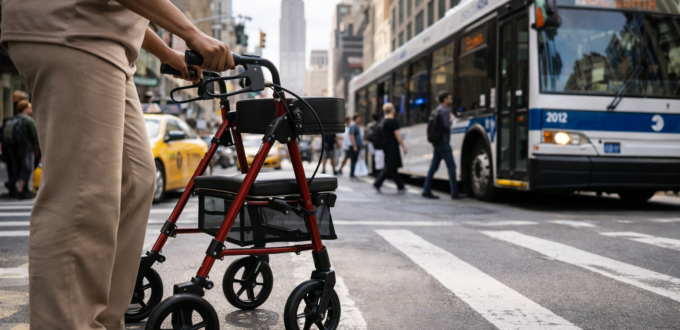
Getting around New York City with limited mobility is challenging, but it is far from impossible. The key is understanding how the city’s transportation system, sidewalks, buildings, and support tools actually work in real life, not how they are supposed to work on paper.
One of the most significant advantages of NYC is its density. Essential services such as pharmacies, grocery stores, doctors’ offices, and community centers are often closer than in suburban areas. For people with limited mobility, shorter distances can reduce dependence on long transit rides. Choosing routes with fewer intersections, smoother sidewalks, and curb ramps often makes more of a difference than speed.
Public transportation plays a central role, but it requires planning. Many subway stations remain inaccessible, so relying on buses and accessible subway lines is often more realistic. All NYC buses are wheelchair-accessible, offer priority seating, and lower automatically at the curb. Bus routes are also easier to adjust mid-trip compared to subways if fatigue or pain becomes an issue.
Paratransit services are another major option. NYC’s Access-A-Ride program is designed for people who cannot use buses or subways due to a disability. While it requires advance scheduling and patience, it can provide door-to-door transportation for medical appointments and essential travel when other options are not feasible.
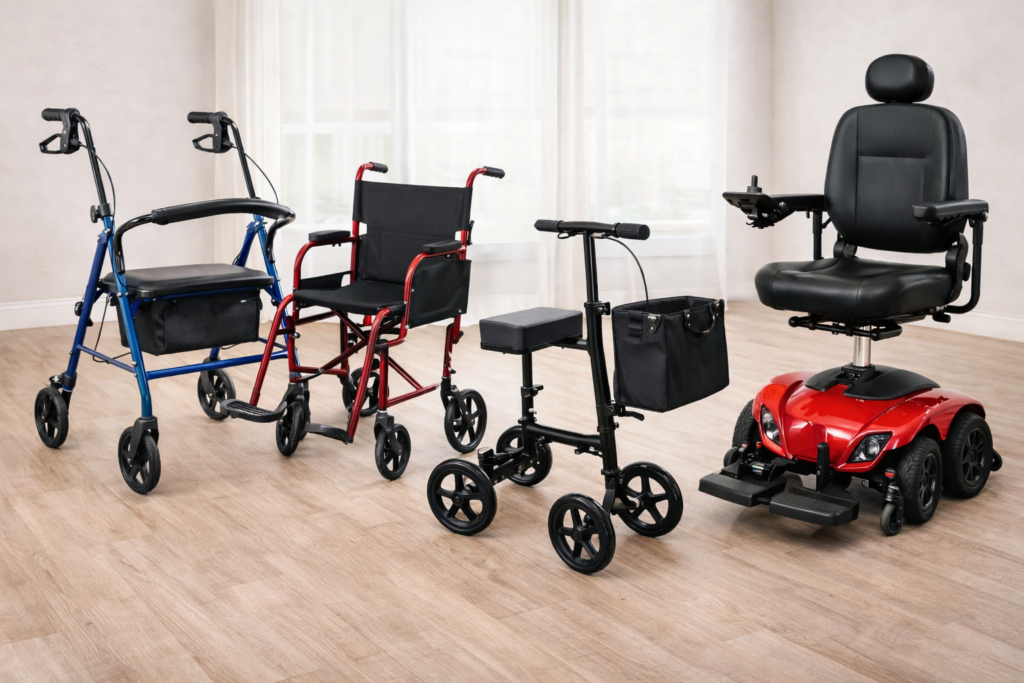
Walking remains part of daily life in NYC, even with mobility limitations. This is where assistive devices become critical. Canes, walkers, rollators, and compact mobility scooters allow people to navigate sidewalks safely while maintaining independence. Many NYC residents choose lightweight or foldable devices specifically because they work better in small apartments, elevators, and tight sidewalks.
Rideshare services have also become a practical alternative. Some vehicles can accommodate foldable mobility devices, and certain services offer wheelchair-accessible vehicles. While not always available instantly, they can bridge the gap when public transportation is too difficult or unreliable.
The most effective strategy is combining transportation options rather than relying on just one. Many people with limited mobility in NYC use buses for routine trips, paratransit for medical needs, and assistive devices for short neighborhood travel. This flexible approach reduces stress and prevents overexertion.
Mobility in NYC is not about moving faster. It is about moving safely, predictably, and with dignity. With the right planning, tools, and support, people with limited mobility can continue to live actively and independently in the city.
You can explore practical mobility and assistive devices commonly used in NYC here:
View mobility devices on Amazon
If mobility challenges are affecting daily life for you or a loved one in New York, support with home care options and eligibility can make a real difference. You can reach out here:
https://familycaregiverny.com/contact/