
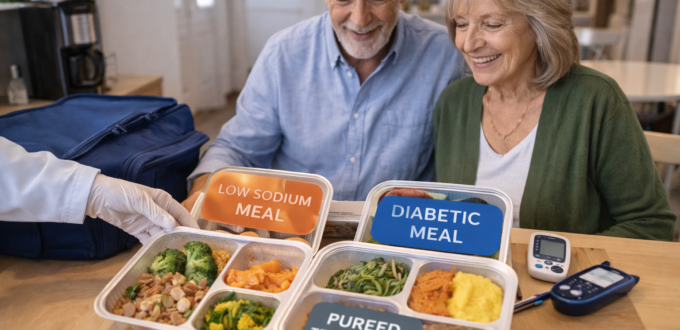
When families search for meal delivery services for seniors in New York City, they are usually trying to solve a health problem, not a convenience issue. Diabetes management, low-sodium needs, swallowing difficulties, or poor appetite often make regular meals unsafe or unrealistic. What most families don’t realize is that meal delivery for seniors in NYC is closely tied to Home Care planning and medical eligibility, not just food companies.
Understanding that distinction helps families avoid paying out of pocket for something that may already be available through covered pathways.
In NYC, senior meal delivery generally falls into two categories. The first is medical or therapeutic meals, designed for specific health conditions such as diabetes, renal disease, heart disease, or malnutrition. The second is community-based senior meals, which focus on nutrition and consistency rather than medical customization.
Families often assume these are private services. In reality, many seniors access special-diet meals through programs connected to Medicaid, managed care plans, or senior services once Home Care needs are identified.
Home Care assessments often document nutrition risks such as weight loss, difficulty preparing meals, or inability to follow medical diets. When these risks are identified, meal delivery can become part of a broader care plan, either directly or through referrals to approved programs.
This is why families who pursue meal delivery alone sometimes miss better options. Without Home Care involvement, dietary needs may be treated as personal preferences rather than medical necessities.
In NYC, many senior-focused meal programs accommodate special diets, including low-sodium, diabetic-friendly, soft-textured, and culturally appropriate meals. These programs often coordinate with healthcare providers or managed care plans and prioritize seniors with medical or functional limitations.
Some meal services focus on medically tailored meals, while others provide nutritionally balanced meals with modifications. Availability varies by borough, eligibility criteria, and funding source.
For individuals receiving OPWDD services, meal support may be addressed within the service plan, especially when diet impacts safety or independence. OPWDD meal solutions are not retail subscriptions. They are part of a broader support structure that may include supervision, routine building, and daily living skills.
This is another area where confusing OPWDD with standard Home Care leads families in the wrong direction.
Private senior meal delivery companies can be helpful short term, but they often do not integrate with medical oversight or Home Care planning. Families may spend hundreds per month without addressing the underlying eligibility that could unlock longer-term support.
In NYC, the most sustainable meal solutions are usually tied to care coordination, not monthly subscriptions.
The right meal delivery solution depends on:
The senior’s medical condition
Ability to prepare or consume food safely
Medicaid or managed care status
Home Care involvement
Cultural and dietary preferences
There is no single “best” service. There is only the best fit within the senior’s care structure.
We help families understand how meal delivery fits into Home Care and OPWDD planning. We guide eligibility, explain what may be covered, and help families avoid unnecessary out-of-pocket costs.
We do not sell meal services. Instead, we work only with top, vetted, licensed Home Care and OPWDD partners who coordinate nutrition support as part of safe, compliant care planning.
If you’re trying to find meal delivery options for a senior in NYC with special dietary needs and want clarity on what’s available and what may be covered, we can help you take the right next step.
You can reach us at
https://familycaregiverny.com/contact