
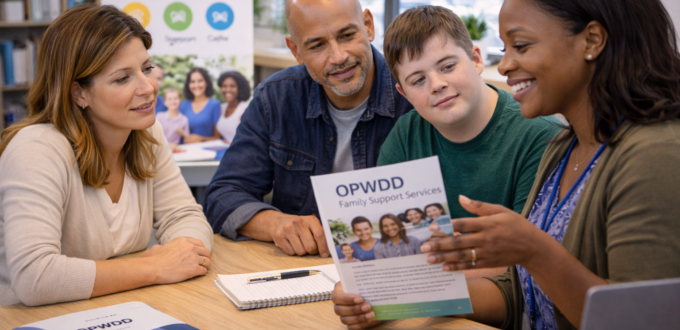
Families often think OPWDD exists only to serve the individual with a disability. In reality, OPWDD support services are designed to stabilize the entire family system, especially in a city as complex and demanding as New York City. That broader purpose is rarely explained, and it’s why many families underuse the supports they are already eligible for.
OPWDD, the Office for People With Developmental Disabilities, supports individuals whose developmental disability began before age twenty-two and significantly affects daily functioning. While OPWDD is often confused with Home Care, it serves a different role. Home Care focuses on daily personal assistance. OPWDD focuses on long-term developmental support, structure, and sustainability for both the individual and their family.
One overlooked truth is that OPWDD assumes families are part of care, not separate from it. Many OPWDD services exist specifically to reduce caregiver burnout, prevent crisis situations, and help families maintain stability at home.
These supports may include respite services that allow families temporary relief from caregiving responsibilities. Respite is not a luxury benefit. In NYC, it is often the difference between keeping someone at home and needing emergency placement.
OPWDD also supports families through education, planning, and coordination. Approved Care Coordination Organizations help families understand service options, manage paperwork, and adjust supports as needs change. This guidance is critical in NYC, where services vary widely by borough and availability.
For families caring for someone at home, OPWDD can authorize in-home supports focused on supervision, routine, safety, and skill development. These services are not Home Care and do not replace personal care aides, but they complement Home Care by addressing developmental needs that traditional home care does not cover.
Community-based supports are another major benefit. OPWDD helps individuals participate in structured day activities, employment preparation, and community programs, which reduces isolation and allows families to balance caregiving with work and daily life.
Unlike short-term Home Care services, OPWDD is designed for long-term planning. Families receive support with transitions such as aging out of school services, entering adulthood, or changing living arrangements. This forward-looking structure is one of OPWDD’s most valuable but least understood features.
Residential planning support is also available for families who can no longer safely provide full-time care at home. OPWDD does not push residential placement, but it helps families plan responsibly when needs exceed what can be managed at home.
OPWDD does not provide cash benefits to families, and it does not automatically allow family members to be paid caregivers. Payment rules depend on the service model, and parents of minors and legal guardians are generally excluded. These distinctions matter and are often confused with Home Care programs.
We help families understand what OPWDD support services actually offer, how they differ from Home Care, and which supports make sense for their situation. We guide eligibility, explain realistic expectations, and help families avoid gaps in care.
When services are approved, we work only with top, vetted, licensed OPWDD providers so families can move forward with confidence and compliance.
If you’re caring for a loved one in New York City and want to understand how OPWDD can support not just the individual but your entire household, we can help you take the next step.
You can reach us at
https://familycaregiverny.com/contact