
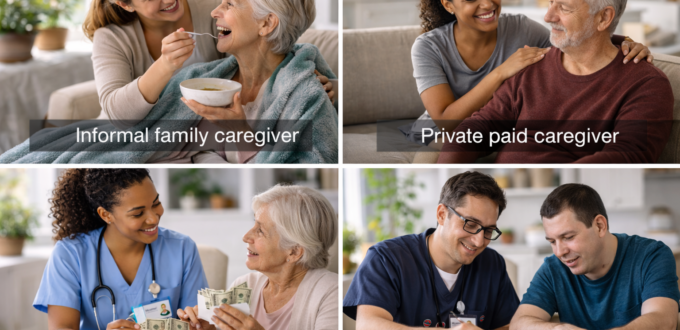
When people ask about the “four types of caregivers,” they are usually trying to understand where they fit and what options actually exist. Most articles recycle the same vague list and skip the part that matters most. Which types of caregivers are recognized inside Home Care systems, and which ones are not?
We take a clearer approach that families actually find useful.
1. Informal family caregiver
This is the most common type and the least understood. An informal family caregiver is a spouse, adult child, or relative who helps a loved one with daily needs such as meals, reminders, supervision, or companionship.
This role exists outside of any Home Care program. There is no formal training requirement and no automatic support structure. Many families start here before realizing they need more help. Informal caregiving is real work, but it is not the same as program-based Home Care.
2. Private paid caregiver
A private caregiver is someone hired directly by a family and paid out of pocket. This arrangement can offer flexibility, but it also comes with risk. There is no Medicaid oversight, no guaranteed backup, and no built-in compliance protections.
Families often choose this option temporarily while exploring long-term Home Care solutions. Costs and consistency are usually the biggest challenges.
3. PCA Home Care aide
This is where Home Care becomes structured. A PCA Home Care aide provides assistance through an approved agency after the patient qualifies for services. Training, supervision, and documentation are part of the model.
The key detail many people miss is that PCA Home Care is patient-driven. The caregiver role only exists after eligibility and authorization are in place. This pathway offers stability and oversight that informal caregiving does not.
4. OPWDD Home Care provider
OPWDD Home Care supports individuals with developmental disabilities and follows a different framework than traditional PCA services. Eligibility depends on diagnosis and functional needs, not age alone.
Caregivers in OPWDD Home Care must meet specific enrollment and training requirements, but the structure is tailored to long-term support. For qualifying families, this model can be life-changing because it is built around ongoing care needs.
These four types are not interchangeable. Families often try to move directly from informal caregiving to paid roles without understanding that Home Care programs recognize services, not relationships.
The transition from caregiver to Home Care provider only happens when the person receiving care qualifies, and services are authorized. That is why understanding the type matters more than the label.
Not all caregivers operate inside Home Care. Informal and private caregiving exists outside the system. PCA and OPWDD Home Care exist inside regulated programs with defined pathways.
We help families understand which Home Care option actually applies to their situation and guide them through PCA and OPWDD eligibility the right way.
You can start here:
https://familycaregiverny.com/eligibility-form
If you want to talk with us directly:
https://familycaregiverny.com/contact
For more New York focused Home Care guidance, visit:
https://familycaregiverny.com/category/blog/